ADD WEIGHT.
EAT PROTEIN.
SHOW UP
AGAIN.
No supplement agenda. No optimal-program rabbit holes. Pick a proven program, track every lift, add weight or reps, eat your protein, and sleep like it matters. Your physique changes when your word starts meaning something.
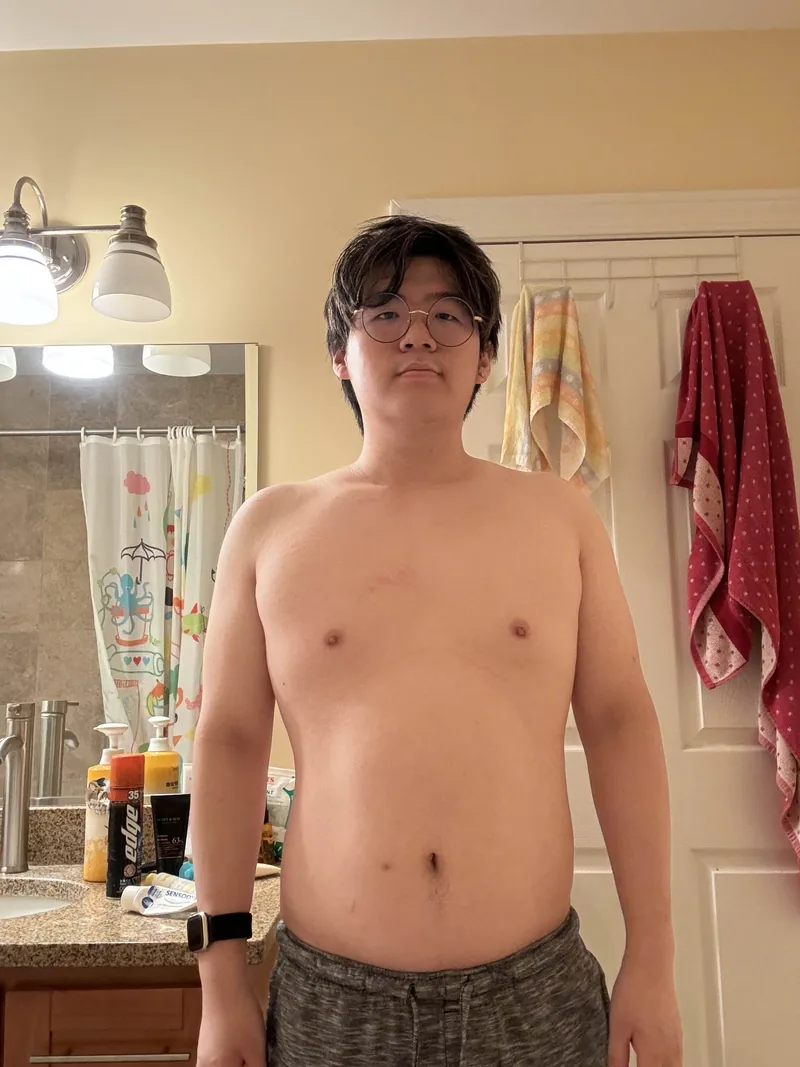 BEFORE 前
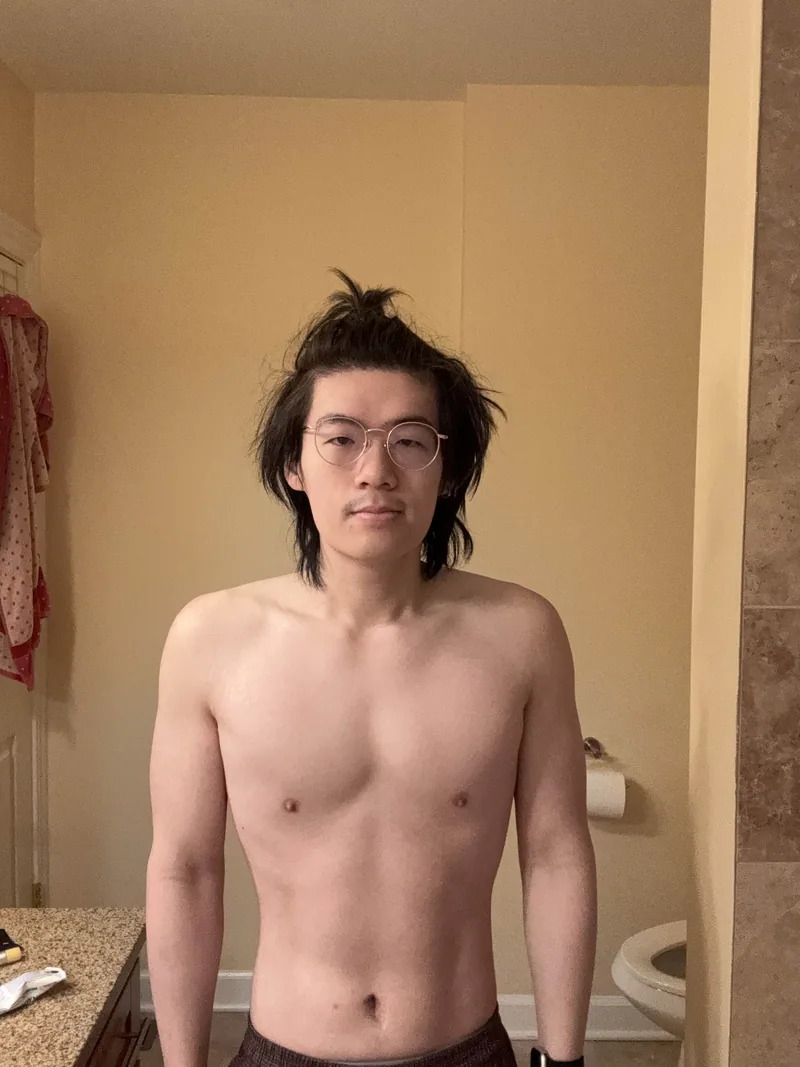 AFTER 後
Training Philosophy: Strength First
If you're not strength training, you're wasting your time. Not cardio. Not yoga. Not whatever group fitness class is trending. You need to be under a barbell, adding weight or reps over time. That's the only thing that changes how you look.
"Progressive overload is the whole game. You add weight or reps over time, or you're just spinning your wheels."— Tri Nguyen 師範
"consistency is the only thing that actually matters in the long run. you can have the perfect program, perfect diet, perfect sleep -- but if you're inconsistent none of it matters. show up."— Tri Nguyen 師範
"i've been lifting for years and the times i made the most progress were when i was focused on moving heavier weight, eating enough to support it, and recovering. every time i got fancy with it i made less progress."— Tri Nguyen 師範
Why Strength Training Builds the Best Physique
You at 180 lbs and 15% body fat look completely different from you at 180 lbs and 25%. Same scale. Night and day in the mirror. Strength training shifts that composition, and every pound of muscle you add burns more calories at rest, keeping you leaner long-term.
"The physique you want lives in the squat rack and the bench press, not on the treadmill. Get your priorities straight."— Tri Nguyen 師範
Program Design: What to Run & How
You need a proven program and you need to run it for minimum 3 months. GZCLP, Starting Strength, PHUL, PPL. Pick one, commit, and run it. Compound movements first, isolation after. Rep ranges: 5-8 for strength, 8-12 for hypertrophy.
"the best program is the one you'll actually run consistently for 6+ months. stop searching for the optimal program. run 5/3/1, GZCLP, Greyskull, Starting Strength -- all of these work. the problem is people run them for 6 weeks, decide it's not working, and switch. that's why they don't make progress."— Tri Nguyen 師範
Which Program Should You Run?
For beginners (less than 1 year of consistent training): GZCLP or Starting Strength. Both are linear progression programs. You add weight every session, which is possible because you're new and your body is incredibly responsive to stimulus. If you can do this, you should. It's the fastest gains you'll ever experience.
For intermediate lifters (1-3 years): PHUL (Power Hypertrophy Upper Lower) or a well-structured PPL (Push Pull Legs) running 6 days per week. At this point your nervous system is adapted enough that you need more frequency and volume to drive adaptation.
For advanced lifters (3+ years): You probably already know what to run. If you're still program hopping at this stage, that's the problem, not the program.
"The program matters less than the execution. A mediocre program run perfectly beats a perfect program run half-assed every time."— Tri Nguyen 師範
How to Track Progress
Keep a training log. This is non-negotiable. You can't know if you're progressing if you're not tracking. Your phone notes app is fine. A notebook is fine. An app is fine. Just write down: what lift, how much weight, how many sets, how many reps.
The rule: if you can't beat last week's numbers on at least one lift, something is wrong. Either your sleep is off, your diet is off, your recovery is off, or you're not pushing hard enough in the gym. All of those are fixable, but you can only fix them if you know they're happening.
"If you're not tracking, you're guessing. And you're probably wrong."— Tri Nguyen 師範
"track your lifts. i don't care what app or method. just know what you lifted last time and try to beat it. that's the whole program design in one sentence."— Tri Nguyen 師範
Nutrition: Protein, Calories & What Actually Matters
1g protein per lb of bodyweight. Non-negotiable. If you weigh 160 lbs, you eat 160g of protein every single day. Not most days. Every day.
Calories determine whether you bulk or cut. Protein determines whether you keep or build muscle. Everything else (meal timing, supplements, "clean eating," intermittent fasting) is noise until those two are locked in. The macro math: 1g protein = 4 cal, 1g carb = 4 cal, 1g fat = 9 cal. Once you understand your daily caloric target and hit your protein, the rest fills in.
Don't overcomplicate it. Chicken, rice, eggs, Greek yogurt, cottage cheese. Hit your numbers and you're doing 90% of what needs to be done.
"Protein is the one thing you can't mess up. Hit your number every single day, no exceptions."— Tri Nguyen 師範
How to Calculate Your Calories
Start with your TDEE (Total Daily Energy Expenditure). This is how many calories your body burns in a day at your current activity level. Use any TDEE calculator online; they're accurate enough to get started. Once you have that number, add 200-300 calories to bulk, subtract 300-500 to cut.
Weigh yourself every morning after using the bathroom. Take a weekly average. If it's going up, you're in a surplus. Going down, deficit. Simple.
"You think you're eating enough. You're almost certainly not. Track for two weeks and you'll be shocked at where your protein actually lands."— Tri Nguyen 師範
High-Protein Foods That Actually Work
The staples: chicken breast, ground beef, eggs, Greek yogurt, cottage cheese, and protein shakes to fill gaps. You don't need a complicated meal plan. Just hit your protein number with whatever combination works for your life.
"you can eat whatever you want as long as you hit your protein and your calories. chicken and rice is great but it's not magic. a burger with enough protein is just as effective. don't overcomplicate food unless you want to."— Tri Nguyen 師範
"meal timing barely matters. eat when it works for you. what matters is hitting your total protein and calories for the day. people obsess over pre/post workout windows when they're not even hitting their protein targets."— Tri Nguyen 師範
"creatine is the only supplement with consistent evidence behind it. take it. it's cheap. it works. stop asking about pre-workout and fat burners."— Tri Nguyen 師範
Bulk & Cut Cycles: How to Actually Change Your Body
You're either eating more than you burn to build muscle, or eating less than you burn to reveal it. That's what a bulk and cut is, and you need to pick one. If you're sitting at maintenance wondering why nothing changes, that's why.
For a clean bulk: aim for 200-300 calories above maintenance. For a cut: 300-500 calories below. Aggressive deficits kill your muscle. Dirty bulks bury your physique in fat. Stay in range and commit to the direction.
"Bulk til you're done. Cut til you're lean. Repeat. That's the whole cycle."— Tri Nguyen 師範
How Long to Bulk vs. Cut
Bulk phases: 4-6 months. Muscle is slow to build. Don't cut at the first sign of softness or you'll never accumulate anything. If you're above 18-20% body fat, cut first. Building on top of excess fat just buries the physique deeper.
Cut phases: 8-16 weeks. Target 10-12% body fat. Visible abs, defined arms, V-taper. Below 10% is contest-prep territory that isn't sustainable for most people long-term.
"Stop cutting every time you gain 2 pounds. You're not getting fat. You're building. Let it happen."— Tri Nguyen 師範
"if you're a beginner (under 1 year of consistent training) you can gain muscle and lose fat at the same time -- body recomposition. eat at maintenance, train hard, get enough protein. this stops working once you're more advanced."— Tri Nguyen 師範
Maintaining Muscle During a Cut
Three things protect your muscle on a cut: protein, strength training, and a moderate deficit. You already know the protein target. Keep the deficit at 300-500 calories and keep lifting heavy.
If you drop the weight and switch to high reps to "tone," you're telling your body it doesn't need that muscle anymore. Your body holds muscle because you're using it to move heavy things. Take that signal away, and it starts cutting the muscle for you.
Use cardio to widen the deficit, not to replace the weight room. 2-3 sessions of 20-30 minutes per week. That's it.
"Keep lifting heavy on a cut. The signal to keep muscle is the same regardless of your calories. Use it or lose it."— Tri Nguyen 師範
"the biggest mistake people make when cutting is dropping weight too fast and tanking their performance in the gym. if your lifts are dropping significantly you're cutting too hard or not eating enough protein."— Tri Nguyen 師範
The Big Lifts: Squat, Bench, Deadlift, OHP, Pull-ups
If you master these five movements, you have 80% of the physique you're chasing. Everything else is accessory work. Your first two years in the gym should revolve around getting strong at these. Nothing else comes close in leverage.
"Learn the big 5 and you've got 80% of what you need. The rest is just details."— Tri Nguyen 師範
Squat
Bar on mid-traps, not the neck. Big breath, brace your core hard. Sit back and down, not just down. Drive your knees out over your toes as you descend. Hit parallel or below. Drive through your heels on the way up.
"most people squat wrong because they don't have the mobility or they're not bracing properly. before you worry about weight, get the pattern right. brace your core like you're about to take a punch, big breath, push the floor away."— Tri Nguyen 師範
Bench Press
Retract and depress your scapulae before you unrack. Grip outside shoulder-width. Touch the bar to your lower chest. Elbows at 45-75 degrees, not flared out. That's how shoulders die. Feet on the floor, drive through them.
"bench press: retract your scapula before you unrack. keep them retracted throughout the set. this protects your shoulders and puts your chest in the right position to do the work. most people's shoulder pain from bench comes from not doing this."— Tri Nguyen 師範
Deadlift
Bar over mid-foot. Hip hinge. Push your hips back, not down. Grip the bar, take the slack out. Big breath, brace, then drive the floor away from you. Think "leg press with a barbell in your hands," not "pulling the bar up." Lock out hips and knees together.
"deadlift is a hip hinge, not a squat. push the floor away with your legs while pulling the bar into your body. if the bar is drifting away from you your form is off. bar stays in contact with your shins on the way up."— Tri Nguyen 師範
Overhead Press (OHP)
Bar in the heel of your hands, grip just outside shoulder-width. Press straight up, not forward. Head through at the top. Lock out with biceps by your ears. Guys skip this lift because the weight is humbling. Don't. Nothing builds shoulders like heavy overhead pressing.
"overhead press is the most neglected lift. people don't do it because it's hard and the weight is humbling. that's exactly why you should do it. nothing builds shoulders and upper back like heavy pressing overhead."— Tri Nguyen 師範
Pull-ups
Dead hang start. Full arm extension. Retract your scapulae first, then pull your elbows down toward your hips. Chin over bar. Control the descent. Once you can do 10 clean reps, start adding weight. Weighted pull-ups are one of the most effective back builders in existence.
"I don't care what your bench is. If you can't do 10 clean pull-ups, that's where your energy goes first."— Tri Nguyen 師範
"rows are as important as presses. most people do twice as much pressing as pulling and wonder why their posture is bad and their shoulders hurt. match your row volume to your press volume at minimum."— Tri Nguyen 師範
Recovery: Sleep, Deloads & What Drives Adaptation
If you're sleeping less than 7 hours, you're sabotaging your own gains. Your muscle protein synthesis peaks during sleep. Your growth hormone releases during sleep. Your CNS recovers during sleep. You need 7-9 hours. Not 6. Not 5 plus a nap.
Deload every 6-8 weeks. Drop your weight by 40%, keep the movements, same rep ranges. Just back off the intensity. Your nervous system accumulates fatigue faster than your muscles adapt. Manage it proactively, or it manages you through injury.
You don't build muscle in the gym. You break it down. You build it when you recover. If you're training hard but recovering poorly, you're just accumulating damage.
"You don't grow in the gym. You grow when you sleep. Stop treating rest like a reward and start treating it like training."— Tri Nguyen 師範
"sleep is the most underrated performance enhancer. 7-9 hours a night. if you're sleeping 5-6 hours and wondering why you're not making progress, start there. no pre-workout, no supplement, nothing replaces sleep."— Tri Nguyen 師範
Sleep Optimization for Lifters
Same bedtime every night. Cold room. Dark room. No phone the last hour. That's the entire protocol. Most guys already know this. They just don't do it.
"Your recovery protocol is as important as your training protocol. If one of them is trash, the other one doesn't matter."— Tri Nguyen 師範
What a Deload Actually Looks Like
Week before deload: you'll notice. PRs getting harder to hit, joints feeling worn, motivation lower than usual. These are signals your body is accumulating fatigue. Don't wait until something breaks.
During deload: same lifts, same rep ranges, 40% reduction in weight. Focus on form, feel the movement, stay active. It's not a vacation from training. It's training with the dial turned down.
After deload: you'll often hit a PR the first week back. This is supercompensation. Your body adapted during the recovery and came back stronger than before. Deloads work. Stop skipping them.
"walking is one of the best things you can do for recovery on off days. low intensity, gets blood moving, doesn't tax your recovery. 30-60 minutes. most people don't do this and then wonder why they're always sore."— Tri Nguyen 師範
Common Mistakes & How to Fix Them
These are the mistakes that derail more guys than anything else. Both fixable in a week once you see them.
Mistake 1: Ego Lifting
Loading the bar with more than you can control. You get no stimulus, just injury risk. The muscle doesn't know how much weight is on the bar. It only responds to tension, time under tension, and metabolic stress. A full range-of-motion rep with controlled weight delivers more stimulus than a partial rep with ego weight.
Fix: film your sets. Watch the video. If it looks bad, it is bad. Drop the weight by 20-30%, own the range of motion, then build back up properly.
"ego lifting is a tax you pay eventually. you can get away with bad form until you can't. spend the time to learn to move well. it'll pay dividends for years and keep you out of the physio office."— Tri Nguyen 師範
Mistake 2: Skipping Legs
You get half a physique. Squats and deadlifts aren't optional. Quads, hamstrings, and glutes are the largest muscle groups in the body. Training them releases the most growth hormone and testosterone of any movements. Skipping legs also creates obvious visual imbalance.
Fix: put squats and deadlifts on Day 1 of your program, not Day 3. When you're fresh, you push harder. When you're tired, you skip the hard stuff.
"guys who do 4 exercises of bicep curls and skip squats will never look how they want. the big compound movements are how you build the foundation. curls, flyes, lateral raises -- these are finishers, not the main event."— Tri Nguyen 師範
Mindset: The Long Game
You don't need to be talented. You need to be consistent. Talent gets you started. Consistency gets you there.
Your progress won't be linear. You'll have weeks where everything clicks: PRs, good sleep, diet is on. You'll also have weeks where nothing moves, you feel flat, and you're questioning if any of it works. Both are normal. Both are part of your process.
Three steps forward, six steps back, two more forward. It all adds up. The only way you don't make it is if you quit.
"When summer rolls around I'm expecting EVERYONE in this program to have a six pack. I'll see you all at the end of Q2. 🫡"— Tri Nguyen 師範
Accountability Is the Foundation
This isn't just about your physique. It's about rebuilding something you've probably lost in the digital age: integrity, honor, and accountability to other men.
Think about it. You swipe instead of approach. You text instead of speak. You disappear instead of explain. That ease has a cost. You ghost. You stop showing up because there's no immediate consequence. That pattern erodes who you are.
This program reverses that. You show up. You respond. Your word means something again. You become the kind of man who faces things head on, and that carries into every area of your life, not just the gym.
"This isn't just about fitness. It's about becoming the kind of man who faces things head on again."— Tri Nguyen 師範
"This program exists to rebuild something most men lost: integrity, honor, and accountability to other men."— Tri Nguyen 師範
Identity Before Motivation
Motivation is unreliable. It spikes when you start something new, and fades when the novelty wears off, usually around week 3-4. The guys who are still training consistently at year 2 aren't more motivated than you. They've just built it into their identity.
The reframe: stop asking "am I motivated to train today?" and start asking "what do I do on Mondays and Thursdays?" You don't decide whether to brush your teeth based on how motivated you feel. Training needs to operate at the same level. It's not optional. It's just what you do.
Identity shifts happen through action, not thought. You don't decide you're a consistent lifter and then start showing up. You show up consistently, and then realize you're a consistent lifter. The behavior precedes the identity.
"Nobody stays motivated. What separates the guys who get the physique from those who don't is they built a system so motivation doesn't matter."— Tri Nguyen 師範
"motivation is temporary. discipline is what actually gets you to the gym on the days you don't feel like it. don't rely on motivation. build a habit so automatic that not going feels weird."— Tri Nguyen 師範
"the guy you're comparing yourself to in the gym has been at it for years, has different genetics, might be on gear, and you don't know his full story. run your own race. the only valid comparison is to your past self."— Tri Nguyen 師範
How to Handle Setbacks
You'll miss workouts. You'll have weeks where your diet is off. You'll get sick, travel, get busy. This is guaranteed. The question is how you respond.
The wrong response: "I missed a week, I've lost all my gains, I have to start over." That's catastrophizing and it leads to quitting. You don't lose muscle in a week. One bad week is noise.
The right response: you miss one workout, you get to the next one. You miss a week, you're back in the gym Monday. You've had just as many setbacks as anyone who quit. You just didn't let them become the end of the story.
"Missing one workout doesn't matter. Missing every workout after that one does. Get back in."— Tri Nguyen 師範
"one bad week doesn't erase months of work. one bad meal doesn't ruin your diet. the compounding goes both ways -- consistent effort builds up, and occasional breaks don't tear it all down. just get back at it."— Tri Nguyen 師範
Wins Stack. Misses Chip Away.
Every workout you hit, every commitment you keep, you stack a small win. Those wins compound. Each one adds a little more confidence, a little more self-trust. You start to believe you're the kind of person who does what he says he'll do.
Every time you miss something you committed to, it chips away at that trust. You feel it. Over time, the accumulated misses erode your confidence in yourself.
This is why consistency matters beyond your physique. It's not just about the pushups or the protein. It's about becoming someone you trust. Show up for yourself consistently enough, and you start to believe you can do hard things.
"Each time we stack our wins we gain a little more confidence in ourselves. Each time you miss a task, it chips away at your self trust."— Tri Nguyen 師範
The Community Principle
You're not doing this alone. When you mess up, the group feels it. When times get rough, you don't bail. You carry each other.
Your accountability to yourself is fragile. Your accountability to men you respect isn't. That's the mechanism that keeps you honest when your own motivation fails. And it will fail.
Be present. Be responsive. Be reliable. Not because someone is watching, but because that's who you're becoming.
"When one messes up, we all mess up. When times get rough we don't bail on each other, instead we uplift and carry the homie up."— Tri Nguyen 師範
"Be present and be a solid mfer to your fellow man."— Tri Nguyen 師範
- 1Strength first.
- 2Progressive overload or it doesn't count.
- 31g protein per lb bodyweight, every day.
- 4Calories in vs. out determines body comp.
- 5Pick a program and run it 3+ months.
- 6Compound lifts before isolation.
- 7Sleep 7-9 hours. It's not optional.
- 8Deload every 6-8 weeks.
- 9Ego lifting kills progress.
- 10Consistency beats intensity.
- 11Bulk or cut. Stop sitting at maintenance.
- 12The long game wins. Every time.
- 13Be present. Keep your word.
THE COMMUNITY