It’s 5 o’clock on a very sunny Friday, I’m reporting live from a sleepy town on the east coast. A can of Coco-Cola is being downed while I type, not the diet or zero sugar version either, I’m going full balls to the wall with 42 grams of sugar. My brain requires the full version of this splendid elixir, as the topic I am getting into demands truth, honesty, and proper reflection given the current state of the world.
As Asian Americans (I will include Asians living in Canada, or other Western countries for this piece, but my homeland Asians, you’re on your own here - read for some enjoyment or enlightenment), and more specifically, Asian American men, we face our own distinct and unique set of challenges that should be discussed, and will be discussed here. For a little background on your esteemed novelist, as I can tell through the screen how much you are dying to know about me, I am a young Asian guy in his 20s, and my writer alias is Ime, for which I often refer to myself in third person. There are other topics to tackle as well, but this is pending the editors’ approval, and how many times Ime makes him chuckle or sit back in amazement. So, here goes nothing.
Are AMs on the rise?
I know what you’re thinking. Of course we’re up now, it was a barren wasteland in the 2000s! KPop and K-Dramas have given us the representation Hollywood wouldn’t! BTS gets me matches on the apps! To point out the obvious - yes, Asian representation has made leaps in terms of where it was a decade or two ago. I’m sure the millennials and Gen Xers that read this will have plenty of war stories to share about the Ken Jeong era, the “Ching Chong” eye pulling and karate chop sound effects, those Asian side characters that solely get casted so the white lead has someone to bully and push around before he gets the cheerleader. I’ll consider this the baseline for measuring the “rise” of AMs, even though the bar was certainly in hell at those points in time, which makes for the case of anything is better than nothing, like the family dog begging for tableside scraps after their owners have finished with their steak and lobster dinner.

So, yes, technically speaking, we are on the up and coming. But, unfortunately, Ime is going to be that guy at the kickback who just can’t seem to be fully present or happy, and must bring up things that absolutely nobody wants to hear as they are enjoying a nice cold beer. So here is when I butt in and interrupt a casual and chill conversation, and say: media representation is not the same thing as societal respect, and while South Korea and its media companies have gotten very good at churning out the former, the latter has still yet to show up to the party bearing gifts for the host.
Allow me to explain what I mean, because I don’t want to just be a doomer about it - honestly, it’s an easy and boring trope, and frankly it’s also bad writing.
Media representation is not the same thing as societal respect.
Growing up, and even now in my very normal 9 to 5 day job, there is a very specific role handed down to Asian men that nobody bothers to announce out loud, unlike a boarding call to your Spirit Airlines flight to Miami. As an AM, you just sort of absorb it through osmosis, almost like a secondhand smoke. The role is as follows: Be competent, but not authoritative. Be quiet and polite, with a dash of subservience. Don’t rock the boat, lest you want to be the first casualty overboard when a small wave hits. You may be included, but you’ll be the side character, not the main protagonist. Sit down at your desk and be the Excel monkey, while your co-workers gossip about Love Island and how long that one not-so-lowkey office romance will last. We’ll call this the “safe eunuch” role. I’d like to make note that I didn’t invent this archetype or concept, just handed down a catchier name for the predicament. The safe eunuch gets a raw deal: at times, you will be valued for your output, but quietly discouraged from taking up any social space beyond it. You’re not going to be the loud one that rallies the troops, more so you will apologize for taking up too much space and shrink yourself to bend around others’ presence. And the moment that you try to break out of it? As my one Italian friend’s nonno used to exclaim: Fuhgeddaboudit! As soon as you try to crack a joke that might be a bit too risky in a work meeting, you can feel the temperature in the room shift, as if you violated some arbitrary agreement (or maybe Tom in accounting decided to dial down the office thermostat again - why is he always adjusting it?).

The safe eunuch is essentially a neutered house pet. In terms of dogs, think Chihuahua, not German Shepard. The owners of a chihuahua will let it bark all day, let it puff up its little chest and act tough, because everyone in the room knows it’s small and ultimately harmless compared to the other dogs. The barking and overall aggressiveness is passed off as entertainment rather than a credible threat, so it gets indulged instead of shut down. The safe eunuch, or chihuahua in this instance, gets yummy treats from time to time, and gets carried around like a baby would. However, the leash will always stay on, and the job of actually guarding the house when a real threat shows up at the door - that role is going to the Doberman, or the owners, without any need for an audition to play the part. AMs that are forced into signing the safe eunuch contract are under terms of agreement that performance is generally welcomed, but authority is not. The scarce validation and applause that we get for being harmless yet useful is not the same thing as being taken seriously, and should never be confused for respect, or having an actual seat at the table.
Look, I’m not going to die on this very small hill and say that every single Asian guy in America is walking around in visible anguish about this. Most of us are actually fine, or at least performing “fine” well enough to get through our day. But there’s a very real tiredness, exhaustion, that comes from being uber competent and ultra invisible at the same damn time. If you’ve felt this feeling deep down, you’ll know exactly what I am talking about, and if not, well congratulations, go and enjoy your weekend.
Here’s a part that’s harder to say out loud or write about, as it involves our parents, where there is a real culture of shame around even broaching the topic. Most of our parents, or grandparents, came from somewhere and survived something that makes our complaints look, on paper, trivial and miniscule. To be honest, they’re not wrong in that their generation had it harder in more ways than one. But the “someone had it harder than you” trope has been used as an uncomfortable conversation ending move for so long, that entire generations following after them have just learned to take it on the chin, muster up a half baked smile, and never mention it again. I wish to break this cycle, not by being a baby and throwing a temper tantrum, but by plainly saying: it is very possible for our parents and elders to have suffered real things, and for us to also have very real things worth discussing in an open and honest way, without finger pointing or tone policing. These two facts are allowed to coexist, and nobody’s Oppression Olympics™ trophy gets taken away.

I’ll give you a personal story of mine, because I believe individual experiences and specifics are far more important than theories. I did a summer internship with a firm that had exactly the type of intern cohort you would expect for Finance - good business schools, mostly white, and yours truly, Ime. By week two, one of the frat-bro type interns in my group had already all but signed his return offer in his head. He had relayed to me that one of the senior associates “loved him”, and the two of them were already locked in for a tee time during the last week of the internship. I’ll remind you again that this was week number two, only a couple of working days removed from icebreaker activities and awkward “introduce yourself” PowerPoint presentations.
I wasn’t the intern that hid in the corner, rather, I got along well with the analysts on my team, and made good connections and even friends in the cohort. I could honestly talk to anyone in the company, minus a couple of the MDs, without breaking a sweat. But there’s a stark difference between getting along with someone and someone deciding, instinctively, that you are one of “their own”, and I could never close that gap no matter how hard I tried. I got handed off some of the technical grunt work that an AI would be doing in a matter of 20 months, while the frat-bro intern acquired a golf relationship strictly off pure vibes (he was not Rory McIlroy either - his handicap was around 30 for Pete’s, or Ime’s, sake). And honestly, I can’t even call it racism outright, because that just feels like a cop-out, as everyone in the office was friendly and cordial, nobody had said a wrong word. That’s the part that’s tough to explain: AMs, and Asians in general, get a strain of other-ism that becomes too subtle to ever call out - we do everything the right way and somehow still come up a couple steps short. The apparent fact that we are AMs might be causing more disconnection than people care to admit, and you can always tell within a couple of minutes whether someone really rocks with you or not. We have all at some point felt the general avoidance or distance that other people may give us, so we compensate and go above and beyond just to get what other races (white people especially) seem to get handed free of charge. It can be very ostracizing, and even though it is not blatant in-your-face racism, you are still perpetually stuck on the outside looking in.
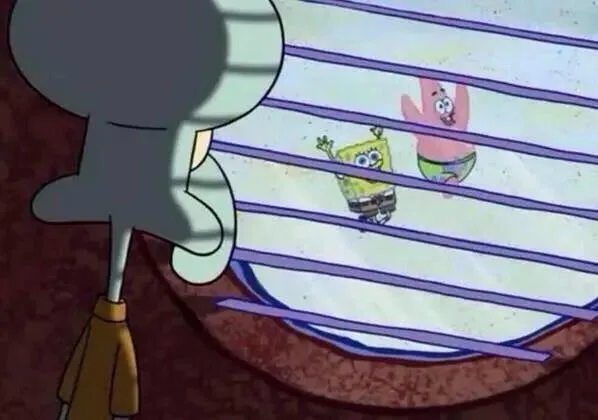
Yes, representation in media matters, but it’s not the finish line that AMs treat it as. A K-Drama lead or Billboard 200 chart topping group is cool, but it doesn’t touch the small everyday things that go on in the background of our lives. It doesn’t hit the meeting room or American society at its core. Visibility and daily dignity can often be different currencies, and although one is currently being paid retroactively, we are still running a deficit in the other.
Visibility and daily dignity can often be different currencies.
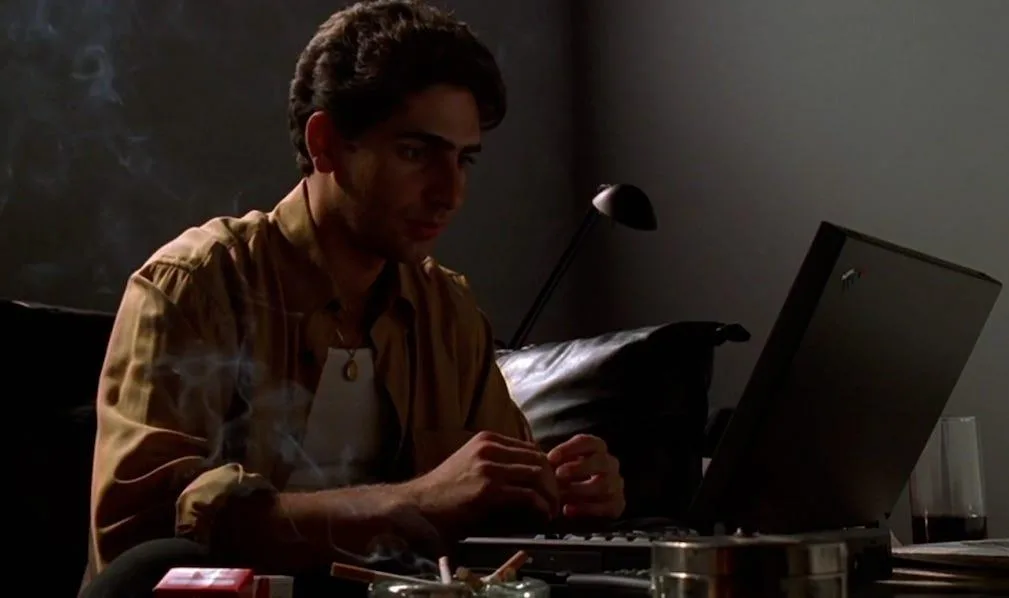
I think about someone like Eddie Huang a lot in this context, probably more than is normal for a guy who has never actually met him. His book-turned-TV show Fresh Off the Boat was honest about first generation immigrant life, written from the inside perspective of growing up Asian in America, in a very unapologetic way. It was good, genuine representation for AMs and Asian Americans as a whole, yet it came and went, never making a splash on American culture and society. It was never a mainstream defining cultural moment the way that The Sopranos was for another first generation immigrant group - Italian Americans. The Sopranos, for a decade running, put Italian Americans on the cultural map, and they became a defining fixture of mainstream America pop culture - the show and its very Italian characters were quoted, referenced, studied, and even imitated for a very long time (even to this day). I believe the show achieved this not by flattering Italian Americans and handing them a “media representation” bone, but by taking their heritage seriously enough to put it at the forefront of culture. When looking at the differences between Fresh Off the Boat and The Sopranos, the wide gap seems to be the difference of being inclusionary versus being an actual mainstay. We’re starting to have an abundance of polite inclusion, but we are still waiting on the latter.
So, are AMs on the rise? My honest answer is yes, in a few areas, and no in others (or we can classify the “no” as works in progress). In terms of visibility, that one is a no brainer. The KPop stans are right, the K-drama girlies are right, and BTS getting you a Hinge match is a very real and sort of ironic form of progress that many Millennials or Gen Xers may not have gotten a chance to take advantage of. For the areas that are still a no, it is the stuff that actually costs something. We aren’t the main characters, just the NPCs, in most American’s daily lives. We’re still stuck as the safe eunuchs doing trivial grunt work while Zach or Kyle fail upwards with golf relationships and social privileges. As AMs, we are not enmeshed in the fabric of American society, or tapped into the frequencies that the majority of regular people share and operate in, no matter how much we try and compensate for it. Visibility was not the whole entire ask, honestly, it was just to be seen and heard as a normal human being worthy of respect. Someone that is allowed to be the lead instead of the punchline, a mainstay instead of a pity invite. We are not fully there yet. But I’m reminded sometimes that you must stop to smell the roses, to take a breath and appreciate how far you have come, and the journey that lays ahead.
Anyways, my Coca-Cola is empty, and Ime has said his piece for today. More to come, pending editorial approval, as always, or maybe for the last time… Thank you for reading.